
Alzheimer’s

How Alzheimer’s Impacts Vision
Learn how Alzheimer’s impacts vision and what steps to take to ensure safety.
The intricate steps needed to make it possible for us to see are mind-boggling. Within the blink of an eye, our brains have the capability to take transmitted details from the environment around us, translate that information based upon input from other senses, thoughts, and experiences, and then build an understanding of that information to help make us conscious of what we are seeing.
It’s unsurprising that Alzheimer’s impacts vision, and therefore people with Alzheimer’s can encounter misperceptions and visual deficits, particularly in the aspects of:
Depth and/or color perception
Contrast
Motion recognition
Peripheral vision
What’s more, individuals who have Alzheimer’s can frequently encounter an altered sense of reality in the form of illusions. For instance, someone with Alzheimer’s disease could see a shadow on the ground, and mistake … Read More »

Caregiving 101: How Dementia Impacts Senior Personal Care Needs

Senior personal care needs, like dressing, can become a struggle with dementia.
Being a caregiver for someone with Alzheimer’s disease or any other kind of dementia requires empathy, creativity, and patience, the capacity to step away from your individual reasoning and logic and realize why a specific behavior is occurring, and then to understand just how to effectively manage it. That is certainly the case with senior personal care needs, such as a loved one who won’t change his/her clothing, in spite of how dirty or unkempt an outfit has become.
There are several reasons why a senior with Alzheimer’s disease may insist upon wearing the same outfit, including:
Memory or judgment problems, including losing track of time or thinking the clothes were recently changed
The comfort and familiarity of a particular piece of clothing
A need to maintain control
Struggles with … Read More »
Tips to Solve Inappropriate Alzheimer’s Behaviors

Inappropriate Alzheimer’s behaviors are common and can be managed compassionately.
Disbelief. Shame. Awkwardness. Discomfort. Many of these types of feelings can cycle through a family caregiver’s heart when a loved one with dementia displays disinhibited behaviors, such as:
Rude or tactless comments
Inappropriate sexual advances or remarks
Removal of clothing at improper times
And other socially unacceptable actions
The complicated changes that occur to the brain in Alzheimer’s disease may cause a complete turnaround in an older adult’s personality and behaviors, such as a formerly genteel grandma suddenly swearing like a sailor. For an individual who is confused, uncomfortable, disoriented, or has simply forgotten social skills and graces, these behaviors are actually quite common, so it’s crucial to learn how to specifically manage them should they arise in someone you love.
Hired Hands Homecare’s Alzheimer’s care experts suggest trying the following tactics … Read More »
Dementia Caregiver Tips for COVID-19
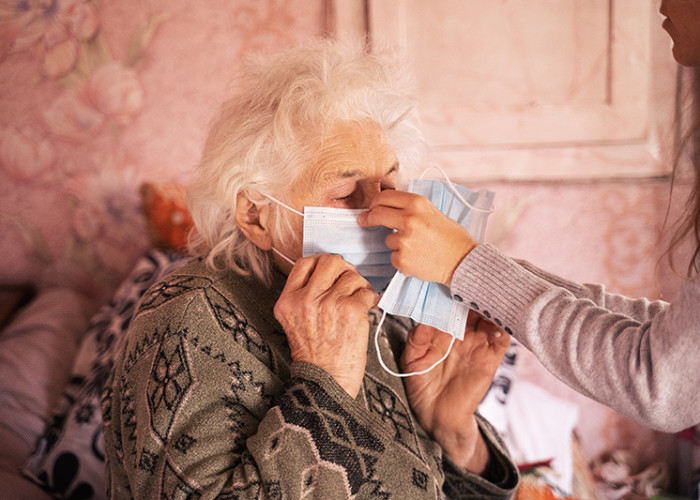
Our team is here to keep you informed with the most useful dementia caregiver tips for COVID-19.
Providing caregiving assistance for your family member with dementia is complicated under the best of conditions; mix in a global pandemic, one that calls for social distancing, masks, and meticulous sterilization of both ourselves and the environment, and the challenge may seem impossible.
Hired Hands Homecare’s team of caregivers offers the following dementia caregiver tips to help reduce anxiousness and irritation for those diagnosed with dementia, while keeping both them and their caregivers safe:
Make self-care a top priority. Now more so than ever, it’s extremely important to assess your own personal degree of stress, and take action to make sure you’re healthy – both physically and emotionally. You can only supply the best help for a senior loved one if your … Read More »
Options for Helping Older Parents Age at Home
Hired Hands Homecare is experienced in helping older parents live comfortably and safely when aging at home.
Ask most older people if they wish to age at home, even if they are struggling with aging-related issues, and the response is in most cases a resounding “yes!” Having to move away from their home, a place with so many memories, can be distressing, even if they admit that it’s getting more difficult to cope. Yet, wishing to continue to be at home and having the ability to stay at home, all alone, are two separate things. So what can you do? Even as a 24/7, around-the-clock family caregiver, you are not able to do it all by yourself. You need help and it could be that in-home care is the solution for aging at home.
The Link Between Senior Nutrition and Dementia: Reduce the Risk with These Tips

Poor senior nutrition may be linked to dementia.
Although there are a variety of age-related issues that can impact senior nutrition, research is now pointing to an even greater reason for ensuring our older loved ones stick to a healthy diet: potential cognitive impairment. And malnutrition in older adults is more common than you may think. According to the National Resource on Nutrition, Physical Activity, and Aging, upwards of 35 to 50% of the elderly residents of long-term care facilities are struggling with malnutrition, and as many as 65% of older hospitalized adults are estimated to be malnourished as well.
Malnourished older adults are twice as likely to see the doctor, and three times as likely to be hospitalized. They also encounter lessened muscle strength and poor healing. Not only that, but a recent study points to the … Read More »
Dementia Exercise Suggestions for Each Stage of the Disease
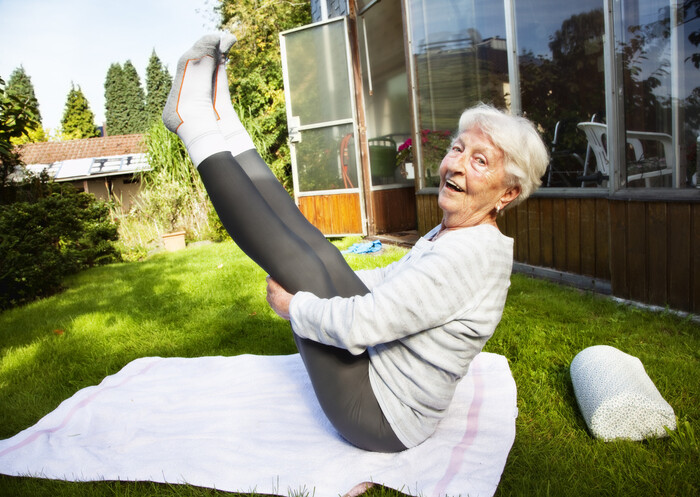
Try these dementia exercise recommendations for each stage of the disease.
The many advantages of staying physically active are clear, but what is not as well known is that exercise can be extremely beneficial for those with Alzheimer’s disease, for a number of reasons: reducing the risk for muscle weakness and other issues that stem from inactivity, easing the effects of psychological and behavioral challenges, and much more.
As with anyone considering starting a new exercise routine, the doctor should first be consulted. Then, try these dementia exercise suggestions, utilizing the following strategies per each person’s individual abilities and the appropriate stage of the disease:
Early Stages
Older adults in the initial stages of Alzheimer’s disease can often still fully enjoy active and social exercises like walking, dancing, bowling, golf, and swimming, even though some degree of … Read More »
Accepting a Chronic Disease Diagnosis Is Beneficial for Seniors and Their Family Members
Facing a chronic disease diagnosis head-on does not mean giving up.
In Isaac Asimov’s opinion, “The easiest way to solve a problem is to deny it exists.” It’s a standard feeling for many family caregivers when their loved one is faced with a chronic disease diagnosis, such as dementia. Even though this can instill some measure of comfort in thinking that life can carry on like it always has, if only we don’t acknowledge this new reality, the truth is that acknowledgement is extremely important in order to get the necessary support.
It is understandable for a family member to wish to deliver all of the care a senior loved one needs. Nevertheless, frequently in the crux of denial are feelings of guilt, helplessness, and in some cases incompetence in the ability to “fix things.” And you will … Read More »
Queens and Aces!
Wow… GREAT turnout at today’s Marin Senior Fair!
Stop by booth 186 to say hello to Blake and Carrie!
Come on Queens and Aces… BLACKJACK!
What to Do When a Senior Is Unaware of Dementia Behaviors
Anosognosia for dementia patients, or the unawareness of dementia behaviors, can be challenging.
“How could you think that I have dementia? There’s not a single thing wrong with me!”
If a loved one with dementia expresses feelings like this, you might be thinking that he or she is simply in denial and unwilling to accept such a difficult diagnosis. Yet, there might be another reason: anosognosia, when a person is truly unaware that he or she is impaired by dementia.
Finding the most effective way to respond to a senior who is unfamiliar with his or her own dementia behaviors is a challenge. As the professional providers of the best elderly care Pleasanton and the surrounding area have to offer, we’ve compiled some tips to help family caregivers better manage care for someone with anosognosia:
Understand that the older … Read More »