
Senior Safety

Why Boredom in Dementia Is a Bigger Deal Than You Think and How to Beat It

Boredom in dementia can lead to agitation and anxiety, but the right activities spark joy and connection.
Some pairings just make sense: mac and cheese, peanut butter and jelly, cozy socks and chilly mornings. But boredom in dementia? That’s a combination no one wants. The effects can go far beyond a quiet moment of restlessness. Studies show that a lack of meaningful stimulation can lead to increased hallucinations, agitation, wandering, anxiety, depression, and even delirium. And it’s not just the person with dementia who suffers; boredom can also affect you as the caregiver, increasing the risk of burnout, sadness, and emotional fatigue.
The good news? Boredom isn’t inevitable. It’s preventable. And often, it takes just a few creative adjustments to turn a long, difficult day into one filled with connection and calm.
The Root of Restlessness
When someone … Read More »

The Best Adaptive Clothing for Seniors and How It Supports Independence

Choosing the best adaptive clothing for seniors helps preserve comfort, confidence, and independence.
You might not think twice about what it takes to get yourself dressed each morning, but if you’re helping someone with arthritis, limited mobility, or other health challenges, you know it’s often not that simple. The best adaptive clothing for seniors is imperative to make life easier and restore a sense of independence, dignity, and control.
When Love Feels Heavy: How to Cope With Spousal Caregiver Resentment

Spousal caregiver resentment can leave you riddled with guilt, but you can overcome it with the right support.
You meant every word of those vows: through sickness and health, for better or worse. But no one warned you how exhausting it might feel to live those promises day in and day out as a caregiver. If you’re feeling overwhelmed, frustrated, or even resentful while caring for your spouse, take a deep breath: you’re not failing, you’re just human.
Healthy Conversations With Your Parent Start Here

Learn how to have healthy conversations with your parent to restore peace to your relationship.
When you dedicate so much time and energy to caring for a senior parent, it’s natural for other relationships to take a back seat. After all, there are only 24 hours in a day, and you can only spread yourself so thin. This can lead to additional stress, hurt feelings, and misunderstandings.
The key to overcoming this hurdle is communication. It means having healthy conversations with your parent that may be uncomfortable but allow the opportunity to air grievances, share feelings, and ultimately reinforce the love you have for each other.
Kicking Off a Courageous Conversation
First, know that a planned, formal meeting isn’t necessary for a conversation to be effective. It can be a quick chat while waiting for the coffee to … Read More »
Struggling to Let Someone Lighten Your Caregiving Load? This Might Be Why.

Learn why it’s so important to allow someone to help lighten your caregiving load, and why you may be feeling so resistant to the idea.
The moment Mom is discharged from the hospital, you exhale, believing the toughest part is finally behind you. But instead of bouncing back, she seems drained, anxious, or even weaker than before. She’s struggling with simple tasks, isn’t sleeping well, and feels overwhelmed.
This wasn’t how you pictured recovery. Instead of a turning point, it feels like she’s slipping backward.
What’s going on?
The Unexpected Challenge of Post-Hospital Recovery
Leaving the hospital doesn’t always mean the body is ready to heal. Many older adults experience post-hospital syndrome—a state of extreme stress and vulnerability that can slow recovery, lead to new health complications, and even increase the risk of readmission.
Stress plays a bigger … Read More »
Why Won’t Mom Eat? It Might Just Be an Eating Disorder.

If you’ve been wondering, “Why won’t Mom eat?” it’s important to know the signs of an eating disorder.
Changes in appetite and weight are often considered a normal part of aging. But if you find yourself asking, “Why won’t Mom eat?” it’s important to consider all possible reasons. While factors like medication side effects, dental concerns, or reduced mobility can certainly play a role, there’s another potential cause that often goes unnoticed: eating disorders in seniors.
Six Rs to Improve Dementia Care

Use these six essential tips to improve dementia care for someone you love.
Caring for someone with dementia is one of the most meaningful yet challenging roles you can take on. It’s important to remind yourself regularly: You are doing your best. You are making a difference. A little self-affirmation goes a long way, but there’s more to consider when caregiving gets tough. Enter the Six Rs of dementia care—a framework designed to help improve dementia care and better manage the complexities of the disease.
What Are the Six Rs of Dementia Care?
The Six Rs offer a practical, compassionate approach to navigating difficult dementia-related behaviors. By following these steps, you can create a more peaceful, supportive environment:
Reassure
Dementia can make familiar routines and environments suddenly feel intimidating or strange. Loud noises, changes in lighting, unfamiliar visitors, or even … Read More »
How to Be There for a Senior During a Temporary Assisted Living Stay

A temporary assisted living stay can be less overwhelming and more comfortable with these tips.
After a hospitalization or surgical procedure, the doctor may recommend a temporary assisted living stay before the person returns home. This is typically a short-term time of intensive therapy to promote healing and recovery. However, the thought of moving into a nursing home or assisted living facility even for a matter of weeks or months can be extremely difficult to accept.
Parkinson’s Communication Tips to Help You Stay Connected

Try these Parkinson’s communication tips to enhance your ability to connect with someone you love.
Imagine trying to share your thoughts, feelings, or even a simple idea with someone you love, only to feel as though your words are getting lost. Now, consider how isolating it must be if this were an everyday struggle. For someone living with Parkinson’s disease, this is often the reality. Communication becomes increasingly difficult as the disease progresses, creating frustration and emotional strain for both the person with Parkinson’s and their loved ones, making it crucial to know effective Parkinson’s communication tips. It begins with understanding how communication can be affected by the disease.
The Creative Dementia Care Strategy You Need to Try
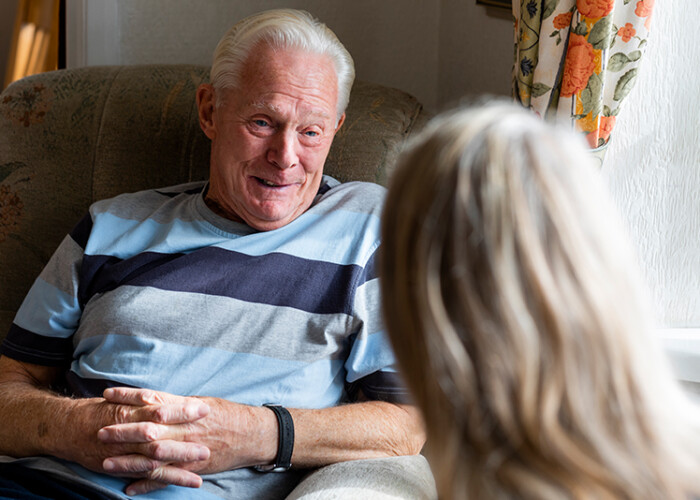
Improv is one creative dementia care strategy that can be both effective and fun.
Creativity, adaptability, and a healthy dose of lighthearted fun are some of the top ingredients to healthy and effective dementia care. It stands to reason then that a spontaneous activity like improvisation is a great way to connect and engage with someone struggling with cognitive challenges. Not only does it allow you to pivot and embrace unexpected plot twists, but this creative dementia care tactic helps you to learn more about the person in your care.