

Benefits of Home Care

Incorporate These Safe Activities for Seniors During the COVID-19 Pandemic
There are some great activities for seniors that are safe throughout the pandemic.
The COVID-19 pandemic has impacted all of us to some extent, but for older adults, it’s been especially traumatic. With an increased risk of serious complications from the virus, combined with the need to isolate from family and friends, the lives of the seniors we love have been turned upside down practically overnight.
At Hired Hands Homecare, we remain committed to providing safe, reliable care for seniors that is focused on each person as a whole – meaning mental and emotional health are equally important to physical wellbeing. To that end, we take time to incorporate meaningful activities into each day, adjusted to the new social distancing recommendations while still bringing enjoyment and connection with others.
Our senior home care experts suggest the following … Read More »

Balancing Senior Safety with Freedom During the Pandemic
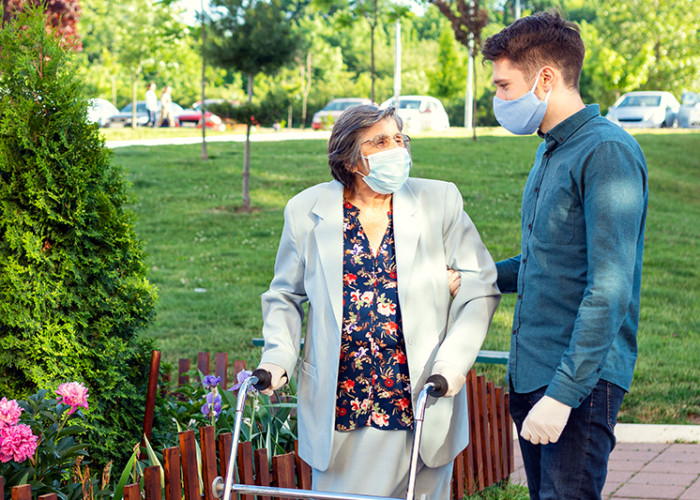
Senior safety is key to keep in mind while stay-at-home orders are lifted.
After months of quarantining, isolating, and distancing from loved ones, stay-at-home orders have been relaxed. But for seniors in particular, can it be safe to consider heading out?
Unfortunately, there is no cut-and-dry answer, and a number of criteria need to be considered to arrive at the best decision for every person, balancing senior safety with mental and emotional wellbeing. For example:
What health problems is the senior loved one encountering?
How challenging has it been for her or him to be isolated from loved ones?
Is the incidence rate of the virus subsiding or spiking within your town?
As a family caregiver, the best place to get started is sitting down and having a one-on-one conversation with the older adult. If your senior loved … Read More »
The Emotions That Come With Caring for Aging Parents, and How to Manage Them
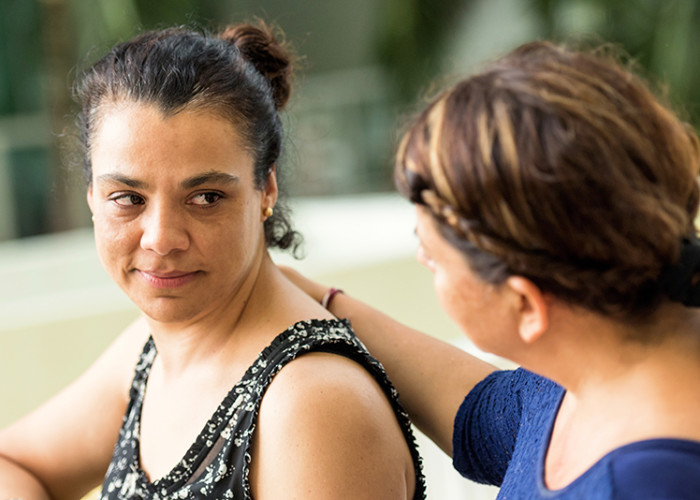
Caring for aging parents raises some complicated emotions.
If you’re feeling a bit discouraged in your role in caring for aging parents, take heart; you’re in good company. Providing care for a loved one is perhaps one of the most complex roles we can hold: highly rewarding on one hand, while simultaneously frustrating and ever-evolving, often leading to feelings of doubt about whether we’re up to the challenge and providing the best possible care.
It’s why so many family caregivers struggle with some or all of these types of feelings:
Guilt: You may feel as though you’re not doing as much as you should to help your loved one, that you’re selfish for wanting time away to yourself, or that you’re inadequate to provide the help your loved one needs.
Helplessness: There are some circumstances when you simply … Read More »
How a Hospice Referral Can Provide Comfort and Eliminate Fear

A hospice referral can help patients meet end-of-life goals.
We often educate on the importance of not delaying a hospice referral because we believe an earlier referral allows the patient and his or her family to better prepare mentally and spiritually for the end of the patient’s life. Yet a common misconception that hospice care is merely symptom management often leads to a later referral. In fact, hospice care involves many additional benefits to provide comfort:
Provides assistance in obtaining appropriate equipment and medications
Empowers families to take care of their loved one in the comfort of home
Helps alleviate the fear that often occurs for patients and their families
Helps a spouse with Social Security issues, financial issues, and long-term care questions
Addresses family dynamics and spirituality concerns (if any exist)
Hospice is not about dying, but about quality of life … Read More »
Advance Health Care Directives Provide Peace of Mind
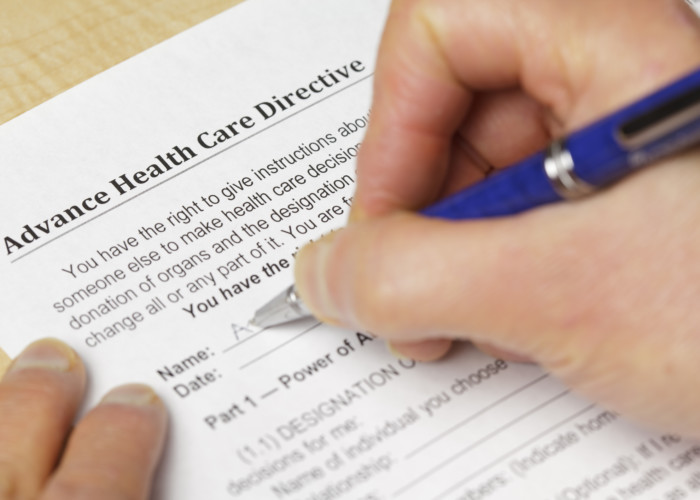
Advance health care directives help individuals ensure their care wishes are met.
Life is unpredictable. And although an advance health care directive can be easy enough to put off, planning end-of-life choices now can help provide peace of mind that your standards and wishes about your health care will be listened to in the future. Additionally, it will ease the responsibility of decision-making on your family members.
Advance directives typically include these documents:
Living will. This written, legal document outlines the kinds of health care procedures and life-sustaining measures a patient would or would not like, such as mechanical breathing (respiration and ventilation), tube feeding or resuscitation.
Health care power of attorney (POA). The health care POA is a legal document that identifies an individual to make health care decisions on the patient’s behalf if the patient … Read More »
10 Myths About Mesothelioma and Asbestos

Learn the facts about asbestos exposure and mesothelioma.
Unfortunately, there are quite a few misconceptions regarding mesothelioma, the rare and aggressive disease caused by asbestos exposure. Some people ask, “Is mesothelioma contagious?” Others believe the disease is linked to smoking.
These incorrect assessments range from how people develop mesothelioma to where the disease forms within the body. Other mesothelioma myths include the demographics affected by mesothelioma, the amount of asbestos exposure needed to develop the sickness and the legality of using the substance in the United States.
Below are some common myths about mesothelioma and asbestos, as well as the realities of the disease:
Myth 1: Smoking Is Linked to Mesothelioma
Smoking is not linked to mesothelioma. The act does not cause or increase your risk of developing the disease. The disease forms along the mesothelium, which is a lining … Read More »
Senior Finances: The Emotional Issue of Money and Caregiving

Having a frank discussion about senior finances is important for long-term planning.
Family financial matters are oftentimes a taboo subject, and in addition, the root of many different controversies, heightened emotions, and misunderstandings. And for a number of today’s older adults, who maintain a “Depression era mentality” from many years of saving for a rainy day and learning to “waste not, want not,” it may be hard for them to grant access to finances to adult children, and to acknowledge the necessity to spend some of those personal finances on caregiving needs.
Talking with an aging parent about finances is most efficient when begun before the need arises, appreciating it might take numerous discussions before an understanding can be reached. These conversation starters can certainly help:
“Dad, at some point, we have to make some choices in regards to … Read More »
Why You Should Seek Help from an Aging Life Care Professional
Make the best care choices with the help of Hired Hands Homecare and an aging life care professional.
We all desire the best for our loved ones – it’s only natural. Yet in some cases when families are involved in an older person’s care, feelings about what is best may clash. This can cause family members to fight with each other as opposed to working together. This is when it’s often a good idea to enlist the help of an outside person like a geriatric care manager (GCM), one who realizes what seniors need for long-term care and how to accomplish getting this care.
Options for Helping Older Parents Age at Home
Hired Hands Homecare is experienced in helping older parents live comfortably and safely when aging at home.
Ask most older people if they wish to age at home, even if they are struggling with aging-related issues, and the response is in most cases a resounding “yes!” Having to move away from their home, a place with so many memories, can be distressing, even if they admit that it’s getting more difficult to cope. Yet, wishing to continue to be at home and having the ability to stay at home, all alone, are two separate things. So what can you do? Even as a 24/7, around-the-clock family caregiver, you are not able to do it all by yourself. You need help and it could be that in-home care is the solution for aging at home.
4 Safer Alternatives to Sleep Medication for Seniors
Sleep medication for seniors can, in some cases, be dangerous.
What could be better than waking up well rested after a full night’s sleep, feeling energized and ready to face the day? For some seniors – as many as one in three – getting sufficient sleep is something that only happens in their dreams. And sadly, it’s a common assumption that lack of sleep is something we just need to accept in our later years – a misconception that Preeti Malani, M.D., chief health officer and professor of medicine at the University of Michigan wants to dispel. According to Dr. Malani, “If older adults believe that these changes are a normal, inevitable part of aging, they may not think of it as something to discuss with their doctor. And not discussing it can potentially lead to health issues not … Read More »