

Caregiver Support Tip

The Strategy You Have to Try: Virtual Reality in Dementia Care

Virtual reality in dementia care can be highly effective in improving engagement, communication, and joy.
Imagine for a moment how it could feel to struggle with the cognitive challenges of dementia. The people who are closest to you are now unfamiliar. The words and phrases that would roll off your tongue without a second thought are now just beyond your grasp. In fact, the world as you once knew it has turned completely topsy-turvy, leaving you yearning for a recognizable foothold.
However, one of the kindnesses imparted by Alzheimer’s is the long-term memories that oftentimes remain intact long after short-term memories have disappeared. It’s why connecting older adults with Alzheimer’s to the past is often a remarkably effective way to engage them – through music, movies, photos, and reminiscing. Now we can add a high-tech tool to the … Read More »
Why You Need to Find a Geriatrician for the Best Senior Health Care

The best senior health care is provided by a geriatrician who is an expert in the unique needs of older adults.
If your child suddenly developed an illness, who would you call? It’s a no-brainer; many parents have the number on speed dial for the pediatrician they’ve carefully chosen to manage the medical care needs of their children. With their specialized training, working with a trusted pediatrician ensures the best possible care.
Likewise, selecting the best senior health care provider who focuses on specific health concerns of older adults is equally as important. However, sadly, the health care system as a whole has not placed a great focus on the unique health care needs of seniors. Dr. Carla Perissinotto, geriatrician and professor of medicine at the University of California, San Francisco, shares her alarm over this age-related health … Read More »
Feeling Worn Down? Try These Ideas to Gain Energy as a Caregiver!

These four simple tips can make a big difference in helping you gain energy as a caregiver.
Providing care for someone else can be exhausting. Add in the shortened daylight hours of fall that we’re beginning to experience, along with the everyday stressors in life, and it’s no wonder so many of us are feeling worn down and sluggish. Try these ideas from our home care team to help you shift from feeling fatigued to fabulous and gain energy as a caregiver.
Consume more high-energy, complex carbs. If the hectic pace of life or simply ingrained habits have you grabbing a quick bowl of sugary cereal for breakfast, snacking on chips and soda, and seeking out comfort foods like macaroni and cheese or white bread, it’s only natural for your energy level to be sapped. Instead, choose whole grains, … Read More »

Tips for Communicating About Your COPD Diagnosis

Communicating about your COPD diagnosis can be easier with these steps
It began with your inner circle, those closest to you, and it has slowly been spreading outward to good friends and acquaintances. Communicating about your COPD diagnosis and knowing how to respond to the numerous questions that arise about it can be uncomfortable – for you personally, and also for those you’re speaking with as well.
Surprisingly, you might find that the biggest challenges come in speaking with your primary caregiving partner – the person who is closest to you personally. The caregiver/care receiver relationship can raise a number of emotions. The individual on the receiving end of care may feel insecure and self-conscious as a result of needing assistance, that may lead to feelings of anger and frustration just to name a few. The care provider … Read More »
How Should You Respond to Aggressive Behaviors in Dementia?
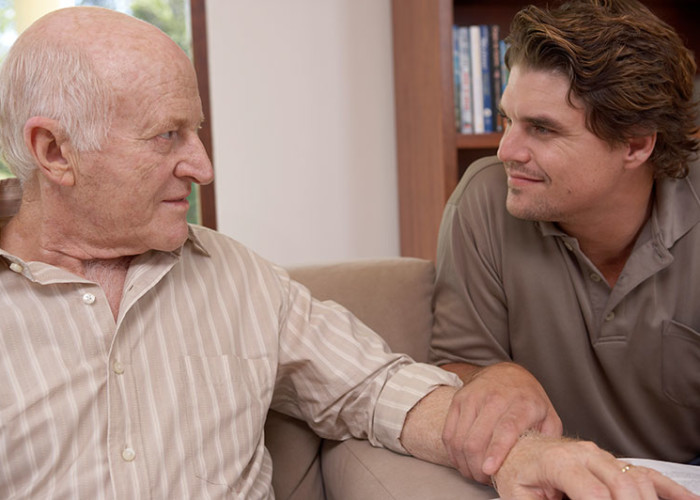
Remember the six R’s when responding to aggressive behaviors in dementia.
Of the many challenging behaviors common in Alzheimer’s, probably the most complicated to manage is aggression. A senior who has always been mild-mannered can abruptly lash out in outbursts that are truly alarming: hitting, cursing, kicking, yelling, biting, or throwing objects. How can you, as a family caregiver, safely help restore a sense of calm when confronted with aggressive behaviors in dementia?
To start with, remind yourself that the aggression is a consequence of the disease. It is not something the older adult can control, and it is not intentional. That said, it must be defused to keep both you and the senior safe from harm.
“The 6 R’s of Managing Difficult Behavior,” developed by Dr. Peter Rabins and Nancy Mace in their book The 36-Hour Day, … Read More »
How to Care for Someone With a Progressive Disease
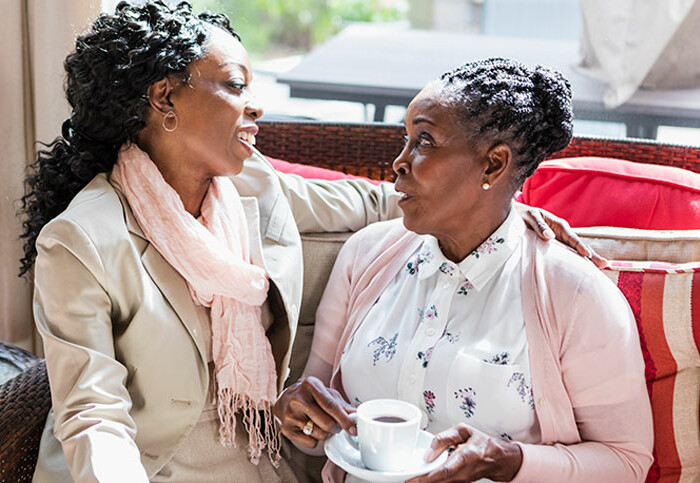
These tips will guide you in how to care for someone with a progressive disease.
It might have been expected, or perhaps broadsided you without warning. Mom has just received the official diagnosis for a progressive disease that is likely to make independent life difficult. While there are a number of uncertainties, one thing is for sure: she is adamant about remaining at home – meaning you’ll have to learn how to care for someone with a progressive disease.
Welcome to the world of family caregiving! If you’re feeling a bit overwhelmed with what can be expected next, these recommendations will help.
Discover as much as you’re able to about the disease. The older adult’s doctor can provide you with resources and educational materials to help you know what to anticipate and to gain confidence in your caregiving role.
Prioritize … Read More »
4 Ways to Boost Resilience in Older Adults

Discover how to improve resilience in older adults in four simple steps.
Did you ever encounter someone so inspiring that it completely changed your viewpoint on life? It might lead you to pause and wonder what it is about that person that supplies them with the drive and strength to stand out from the crowd. This type of resilience in older adults is especially encouraging, showing us that whatever comes our way, at whatever age, life is beautiful, rich, and fulfilling.
At the Robert N. Butler Columbia Aging Center at Columbia University, research workers decided to examine this further with their “Exceeding Expectations” project. They followed 20 elderly New Yorkers from diversified backgrounds and cultures for a two-year time period. Here is what they learned about the resiliency of these extraordinary individuals.
They never let their obstacles define them. … Read More »
Help Seniors Live Longer and Better Through Finding a Sense of Purpose

Learn how to help seniors live longer and better with these tips.
What inspires you to get up out of bed every morning? The answer is different for every one of us, of course, but there’s one commonality: it could extend your life. Scientific studies are showing us that having a feeling of purpose is a key way to help seniors live longer and better, something evidenced in Japan – the country with the highest life expectancy on earth.
Remarkably, there is no word for our definition of “retirement” in the Japanese language. There is, instead, a concentration on maintaining purpose and meaning beyond a person’s working years and defining themselves according to their current passions and pastimes.
So just how can we help older adults – and ourselves – stay involved in what sparks interest and makes … Read More »
Separate Truths From Myths About Hospice Care

Learn some of the most common myths about hospice care and the true facts about this incredibly beneficial form of care.
If you knew that a significantly better quality of life could be achieved for someone you care about, you would not think twice about exploring that option. Yet one of the most beneficial forms of care – hospice – is one that family members shy away from, due to many different misperceptions and myths about hospice care.
Hospice is meant to help someone with a life-limiting illness find respite from pain and other difficult symptoms, while obtaining comfort as well as spiritual and emotional support. Hospice care is provided night and day, both for the individual needing care as well as family members. And, for anyone covered by Medicare, hospice care is offered for a very low … Read More »
How to Overcome Sleeping Problems in Dementia

Try these tips to help someone experiencing sleeping problems in dementia get a better night’s rest.
If it seems like a senior with dementia has completely rewritten the rules on when and how to sleep, you’re not dreaming. For reasons that aren’t yet fully understood, sleeping problems in dementia are quite common. Changes to the senior’s circadian rhythm lead to drowsy days and sleepless nights.
The development of the disease is one contributing factor. Damage to brain cells causes increased weakness, making everyday tasks and activities exhausting. Medication side effects from commonly-prescribed dementia treatments can further exacerbate the issue.
Why Is a Good Night’s Sleep Crucial for a Loved One with Alzheimer’s?
Decreased sleep quality in dementia may bring about an increase in restlessness and delusions, and can cause serious safety concerns, such as the potential for an … Read More »