
Senior Health

How to Tell the Difference Between Dementia and Medication Side Effects
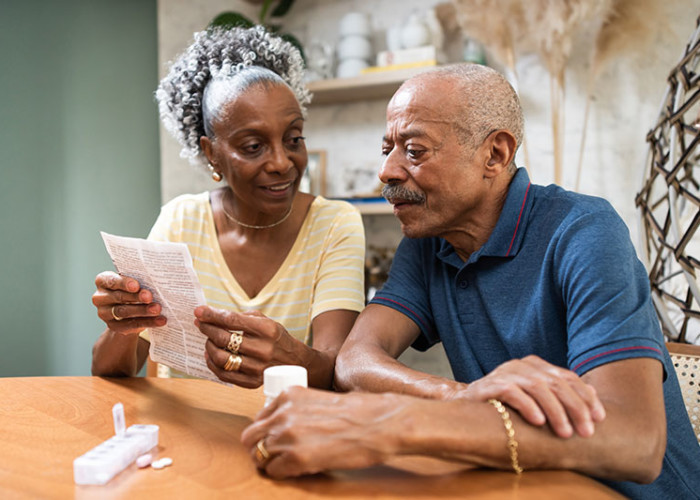
With so many similarities, can you tell the difference between dementia and medication side effects?
Disorientation. Confusion. Memory loss. While these are certainly hallmark symptoms of Alzheimer’s disease and other types of dementia, they may also come about from taking certain medications. Before automatically assuming an inevitable diagnosis of dementia, review the following list of prescribed medicines that can cause similar adverse effects in order to help tell the difference between dementia and medication side effects.

The Latest Surprising Facts About Alzheimer’s
The latest surprising facts about Alzheimer’s are changing the way scientists are thinking about what causes the disease.
Surprising facts about Alzheimer’s are surfacing nearly every day, it seems. Take, for instance, amyloid plaques: they’re at the heart of scientists’ hypotheses about what causes Alzheimer’s, and the focus of research is on removing them as an effective treatment option and hopefully, one day, a cure.
Yet a research study led by the University of Cincinnati and in cooperation with the Karolinska Institute in Sweden is turning this thinking upside down. Alberto Espay, the study’s senior author and professor of neurology at UC, shares, “It’s not the plaques that are causing impaired cognition. Amyloid plaques are a consequence, not a cause.”
If Not Amyloid Plaques, Then What?
Espay and the UC team believe the focus should instead shift to … Read More »
The Benefits of a Daily Routine for Seniors
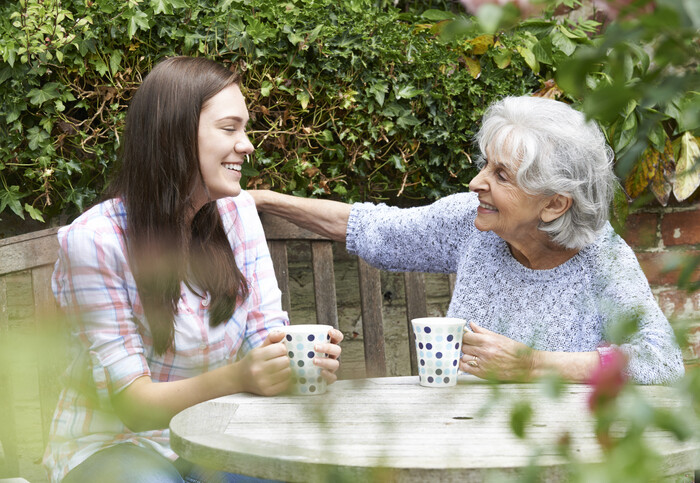
ry implementing a daily routine for seniors who are struggling with physical or cognitive functioning problems.
Life can be full of uncertainties. For seniors who are feeling less in control of particular areas of life, such as losing cognitive or physical functioning, concentrating on what can be controlled is empowering. An excellent way to help is by establishing a daily routine for seniors, personalized to a senior’s particular interests and needs.
Keep in mind that the older adult’s routine is certainly not meant to be a rigid regimen to be adhered to, but simply the basis for predictability and structure. With the older adult’s input and direction, settle on a preferred framework for every day. A sample daily routine may look like this:
Wake up at 7:30 a.m.
Handle personal hygiene needs and get dressed
Enjoy breakfast on the porch while … Read More »
The Harm in Talking to the Elderly Like Babies

We all need to understand how disrespectful talking to the elderly like babies is, and to avoid this common practice.
Watch what happens at the next family members get together when a new mother places her baby in someone’s arms. The person is likely to shift instantly into baby mode: a sing-song, high-pitched voice, exaggerated facial expressions, and overly-simplified speech. Of course, this is quite normal and actually beneficial to an infant’s growing brain. Sadly though, it is also quite common to hear people talking to the elderly like babies too. This can be so harmful to the elderly, that there’s a word to describe it: elderspeak.
A recent research study by Susan Kemper, a professor specializing in gerontology at the University of Kansas, matched senior listeners with younger speakers. Even with the seniors’ instructions just to listen … Read More »
Concerned It Might Be Dementia? Here’s How to Bring It Up to the Doctor.

You may be afraid to talk with the doctor if you’re concerned it might be dementia, but these tips can help.
Distress. Embarrassment. Fear. If you’re concerned it might be dementia, the feelings surrounding a potential diagnosis can force you to keep your suspicions to yourself. An AARP survey peeled away some of the layers of emotion to find the reason – namely, worry over losing independence and becoming a burden to others.
While there is some truth to these worries, there are also some misconceptions fueling them. As an example, roughly 1/2 of the participants, who were adults age 40 and over, believe they’re likely to get dementia as they grow older. The truth is that just over 10% of older adults over age 65 are identified as having Alzheimer’s disease.
Because of this, it’s critical for … Read More »
Unique Dementia Signs to Watch For in Latinos
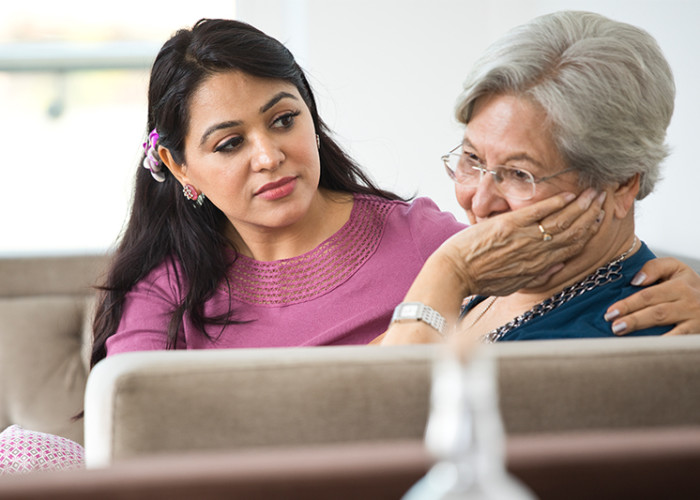
Learn the distinct dementia signs to watch for in Latinos.
A new study sponsored by the Alzheimer’s Association is uncovering some striking results in how dementia may show differently in Hispanic people. While further research is necessary to fully understand whether these differences are the consequence of social/cultural nuances or the dementia itself, it is beneficial information for Latino families to learn the specific dementia signs to watch for in Latinos.
What Are the Unique Dementia Signs for Hispanic Seniors?
Daily Life Activities
One feature of this research was the dramatically faster decline in the capability to do everyday activities, including walking, getting dressed, and taking a shower, when compared with other ethnicities. Andrea Ochoa Lopez, the University of Houston doctoral student who performed the research, explained that the cultural dedication to caring for older relations can be … Read More »
Not All Alzheimer’s Diagnoses Are the Same!
Alzheimer’s is increasingly common in older adults, but not all Alzheimer’s diagnoses are the same!
For many years, experts have been examining the advancement of Alzheimer’s through one basic model. Yet not all Alzheimer’s diagnoses are the same, presenting with a variety of symptoms and progression rates.
Now, however, a large, new collaborative study between the US, Canada, Sweden, and Korea is revealing some fascinating information to help us more accurately understand and treat Alzheimer’s disease. Rather than one universal, dominant diagnosis of Alzheimer’s, researchers have discovered that there are four unique variants that occur in as many as 18 – 30% of cases. This change in thinking is helping researchers more fully comprehend the variations in the disease from one person to another.
The findings are also significant in that they are allowing specialists to begin to … Read More »
Are the Older Adults You Love Missing Out on These Life-Changing Adaptive Tools?
As many as half of all seniors living at home are not utilizing life-changing adaptive tools.
Consider the many tools you make use of each day – your phone, toothbrush, hairbrush – simple items, but ones you can’t imagine living without. For many seniors, there are basic but life-changing adaptive tools available that could mean the difference between living at home and facing a move to assisted living. Yet almost 50% of seniors living at home are not utilizing these helpful tools – even though costs are minimal.
A recent National Health and Aging Trends Study assessed the ability of older adults to execute tasks such as rising unassisted from a sitting position and walking, and discovered that a large number of the participants could benefit from assistive devices.
Not only that, but the likelihood of older adult … Read More »
The Post-Pandemic Health Care Appointments You Should Schedule Today

Learn about three post-pandemic health care appointments you may have been putting off, and why you should get them scheduled.
At the start of the pandemic, life as we knew it came to a screeching halt – including, in many cases, our health care needs. Dr. Ned Sharpless, director of the National Cancer Institute, shares, “There was a time, early in the pandemic, when we didn’t know much about this virus. So at that time, I think hospitals and clinics closing – that made sense.” But he goes on to explain that we know more now – and now is the time to get back on track with post-pandemic health care appointments and procedures.
We have evidence now that the health risks of avoiding exams and tests outweighs the risk of contracting COVID-19. Experts have outlined three key … Read More »
The Increase in Senior Falls From Medications and How You Can Prevent Them
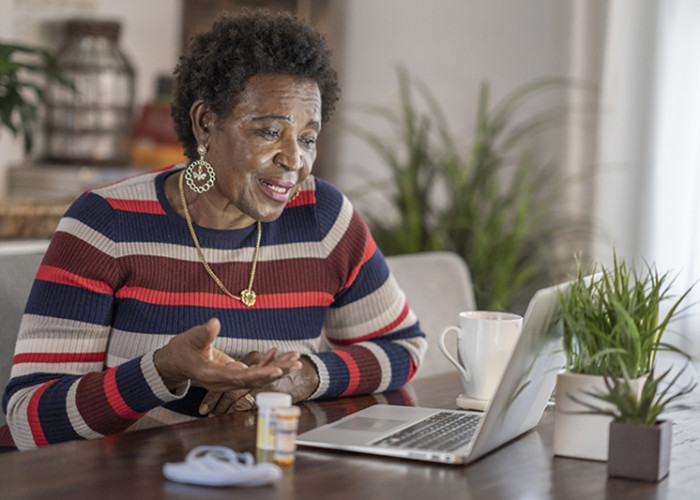
Studies are showing an increase in senior falls from medications, making it imperative to know what to do to reduce fall risk.
We’ve known for a while that there are certain medications that raise the likelihood of falls for seniors. Twenty years ago, a little over half of seniors were impacted by that risk; yet today, that number has increased dramatically – to a staggering 94% of older adults who are now in danger of senior falls from medications. Additionally, deaths from such falls are happening at more than twice the earlier rate.
Researchers who observed this growing concern also discovered that between 1999 and 2017, senior prescriptions for medications that escalate fall risk were filled more than 7.8 billion times. This consists of a spike from 12 million antidepressants in 1999 to greater than 52 million in … Read More »