
Senior Health

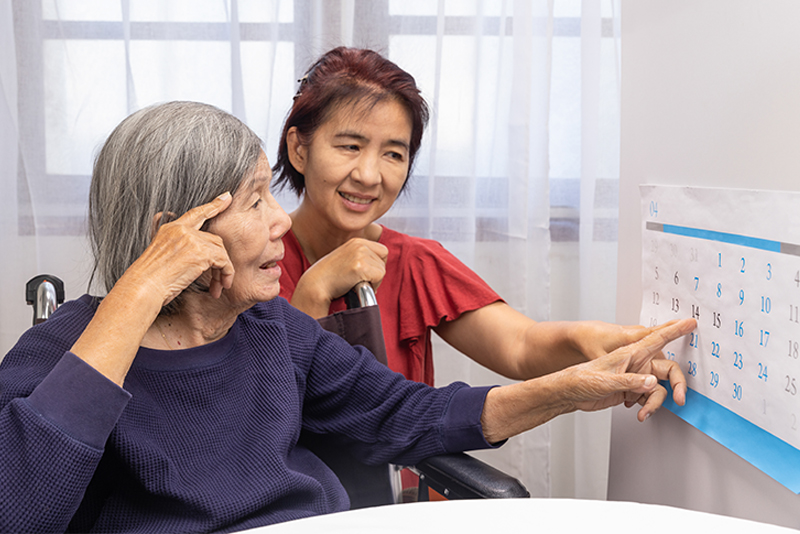
Communication Tips for Dementia: Try Nonverbal Techniques

Sometimes, the most effective way to communicate with someone with dementia is nonverbally.
Conversations with a senior battling with all the challenges of Alzheimer’s, especially in the middle and later stages, is often discouraging – both for you and also for the person with Alzheimer’s. Brain changes impede the ability to listen, process, and respond appropriately to conversations, and it is up to us to employ innovative approaches to communicating to more effectively connect with an individual with dementia.
It’s quite a bit easier than it might appear, however. We already communicate nonverbally in many ways:
Touch
Posture and body movement
Eye contact
Facial expressions
Gestures
Personal space
Consider these communication tips for dementia to include increased nonverbal communication into your interactions with a senior loved one:
Offer reassurance through gentle touch. If a senior loved one is comfortable with touch, hold and pat the … Read More »

What Elephants Are Teaching Us About Alzheimer’s Disease

Researchers are gleaning information from elephants to help us better understand Alzheimer’s disease.
The old adage is true: elephants truly do have amazing memories, even into their later years. To illustrate, they’re able to recollect and go back to highly specific locations decades after visiting them, irrespective of age. Exactly what can we glean from elephants that may result in helping us better understand Alzheimer’s disease and to maximize our own cognitive performance later in life?
Remarkably, older elephants’ brains show no buildup of the amyloid plaques some researchers are linking to Alzheimer’s. Even though other health professionals tout the need for sufficient sleep to permit the mind the chance to clean away plaques, elephants are tromping over that theory, sleeping as little as 2 hours daily.
But one factor rises above the rest which may be the main key: socialization. … Read More »
4 Key Warning Signs of Senior Depression

Watch for the signs of senior depression and seek help immediately if noted.
Lots of people go through periods of time when they simply want to be left alone for a bit with their thoughts, to think through situations in their lives without any distractions, or just to experience some downtime. For older adults, however, being isolated for an extended period of time may be indicative of a more serious condition: senior depression.
At Hired Hands Homecare, our caregivers have shared the journey through depression with many seniors, and would like to offer help. The most important first step is to contact the older adult’s doctor as soon as possible if you suspect he or she is struggling with depression. Depression is treatable, and the sooner, the better.
Keep an eye out for these signs of senior depression in your loved … Read More »
The Power of Play for Seniors: Why Recess Isn’t Just for Kids

Hired Hands Homecare discusses the power of play for seniors.
Do you remember that feeling as a young child when the school bell rang, indicating the conclusion of science and the start of the best part of the day: recess? There was an immense feeling of freedom bounding out onto the playground, leaving behind the pressure of school work for a quick period of unstructured play. Regrettably, for the majority of adults, this is just a happy but distant memory. Play for seniors isn’t usually something that’s considered by many adults. Nevertheless, is it possible, and even worthwhile, to recapture the enjoyment of playing?
Could You Be a Helicopter Child?

Hired Hands Homecare provides tips for determining if you’re a helicopter child.
We have all heard about helicopter parents, particularly when a daughter or son leaves for college, but what about a helicopter child? Truth be told, we may be guilty of hovering a bit too closely ourselves. Finding that optimal harmony between caring and overstepping our boundaries is not easy.
The Dangers of Senior Loneliness – and How to Help
With over 328 million people residing in the U.S. alone, it is hard to believe that senior loneliness would be so prevalent. And yet of the number of older adults living alone, more than 60% of them report being chronically lonely.
Why We Need to Rethink Aging Well

Hired Hands Homecare provides tips for aging well.
A quick Google search for the word “aging” produces topics such as “coping with aging,” “what you can do about aging,” as well as “the cure to aging.” The pessimistic connotations to aging are, regrettably, so embedded in our society that it is estimated that by 2027, the aging care industry will be worth $83.2 billion. While it’s very easy to get caught up in the issues that may be realized in aging well – health concerns, the passing of family and friends, and cognitive issues – what’s getting lost in the shuffle are the remarkable benefits of growing older.
Can Planning for Senior Falls Actually Prevent Them?
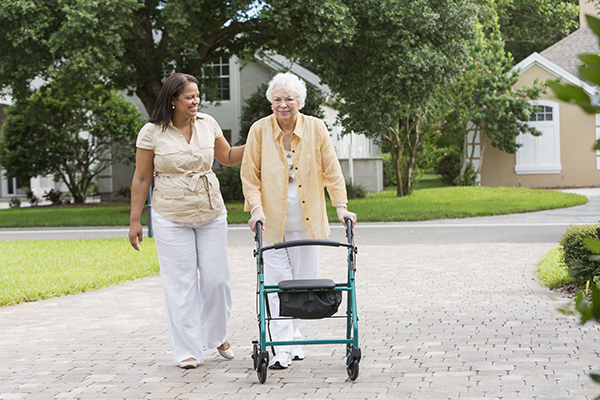
Senior falls can have serious consequences, but with a plan, the risk for falls can be greatly reduced.
Senior falls are all too frequent and may have serious outcomes. Taking preventative measures is key, such as examining the house for fall risks like area rugs and various tripping hazards, inadequate lighting, and a lack of appropriate grab bars and railings. But there is also a new strategy being advised now: creating a fall plan of care, which, when utilized correctly, has been shown to reduce fall-related emergency room visits up to 40%.
So while we absolutely don’t want to plan for a loved one to fall, we are able to be better equipped by helping the person take the following steps:
Stay vigilant – Avoid letting your mind wander and instead maintain your full focus on your surroundings.
Check vision … Read More »
Key Questions to Ask the Dr. as a Parent’s Caregiver

Every family caregiver should get answers to these questions from the doctor.
Of the many responsibilities a family caregiver faces, perhaps one of the more difficult is managing health concerns and knowing what questions to ask the Dr. as your parent’s caregiver. The National Council on Aging estimates that approximately three quarters of all seniors are clinically determined to have at least two chronic illnesses, and are seeing on average of four medical specialists.
Hired Hands Homecare, offering in-home care in Napa, CA and the surrounding communities, offers these simple tips to communicate effectively with those on the senior’s medical team:
Are all of the medications essential? With most older adults taking many medications, you’ll need to keep an in-depth list and review occasionally with the doctor along with the pharmacist, each of whom should be able to make … Read More »
Polypharmacy in Older Adults: Evaluating Risks and De-prescribing

Evaluate the risks of polypharmacy in older adults and keep seniors safer.
More than one out of every three 60-year-olds is currently taking five or more prescription medications, so it’s no wonder that problems occur from overmedication. Polypharmacy in older adults is defined as “…when an adverse drug effect is misinterpreted as a new medical problem – leading to the prescribing of more medication to treat the initial drug-induced symptom,” and can cause a number of additional health risks or worsen existing health conditions.
It’s a good idea for older adults and their caregivers to work together on a plan of de-prescribing. These tips can help:
Compile a list of all medications the senior is taking, including prescription meds, over-the-counter meds, and vitamins/herbal supplements, and share with the senior’s physician and pharmacist.
Request an evaluation of the medications themselves as … Read More »