

Senior Medical Care

Women and Alzheimer’s: Why the Risk Is So Much Greater and How to Help

Understand the trend between women and Alzheimer’s and discover how you can help someone you love who is battling the disease.
Researchers are finally beginning to get a grip on the imbalance between Alzheimer’s diagnoses in women and men. Currently, as many as 2/3 of those with Alzheimer’s in the U.S. are female. As scientists begin to understand the particular nuances behind the increasing trend of women and Alzheimer’s, we can begin to address the problem and find solutions.
According to the Alzheimer’s Association’s Director of Scientific Engagement, Rebecca Edelmayer, “Women are at the epicenter of Alzheimer’s disease as both persons living with the disease and as caregivers of those with dementia. Over the last three years, the Alzheimer’s Association has invested $3.2 million into 14 projects looking at sex differences for the disease and some of the … Read More »

Avoid These 5 Ways That Worsen the Symptoms of Alzheimer’s
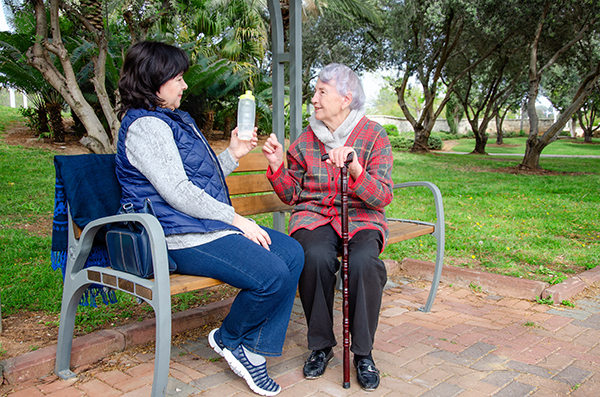
It’s important to be aware of several key triggers that can worsen the symptoms of Alzheimer’s.
While there are a number of commonalities, the symptoms of Alzheimer’s can impact each individual differently. Our highly trained dementia caregivers know, for instance, that while one person may appreciate being outdoors, another may be overwhelmed by so much sensory input and prefer a quieter indoor environment. One may appreciate a morning bath routine, while a dose of resourcefulness is necessary to help a different individual maintain good hygiene.
We also realize there are certain triggers that may often worsen the challenging aspects of Alzheimer’s disease. Family care providers should be particularly careful to avoid the following:
Dehydration. Someone diagnosed with dementia might not be able to identify when they are thirsty, or may refuse when offered fluids. It’s vital to ensure appropriate … Read More »
Warning: These Common Medications May Increase Dementia Risk

Certain medications may now be linked to an increased dementia risk.
They are currently recognized to cause various short-term side-effects, for example, memory issues and confusion, but new research links some of the stronger anticholinergic drugs (like those prescribed for Parkinson’s disease, epilepsy, depression, and overactive bladder) to a markedly higher dementia risk.
The research involved two groups of seniors: 59,000 patients with dementia, and 225,000 without. Approximately 57% of those with dementia, and 51% without, were supplied a minimum of one (and up to six) potent anticholinergic medications. Considering other established dementia risk factors, the outcomes were an astounding 50% increased risk of dementia in individuals who were taking strong anticholinergics daily for three or more years, with the highest risk to people who received a dementia diagnosis before age 80.
It is critical to note that … Read More »
How to Empower Seniors to Take Control for Better Chronic Health Care

Seniors know best what they’re dealing with; empower them to take control of their chronic health care needs.
When it comes to chronic health care, seniors are the experts, hands down, with up to three out of four seniors affected by a number of conditions that are ongoing, necessitate long-term medical treatment, and place restrictions on activities. With the never-ending barrage of bloodwork as well as other tests, physicians’ appointments and procedures, and medications, managing chronic diseases usually takes both a physical and emotional toll, and may quickly become daunting.
Dr. Mary Tinetti, chief of geriatrics and internist at Yale School of Medicine, said, “Once you get three, four, or five and six diseases, several things happen: Number one, almost guaranteed, trying to get one of these diseases under control is going to make one of the other … Read More »
How Artificial Intelligence Is Playing a Key Role in Alzheimer’s Research

Learn about the tool that’s helping expedite Alzheimer’s research.
Alzheimer’s research took a giant leap forward, thanks to a tool that allows pathologists to analyze and classify amyloid plaques and abnormalities in blood vessels through technology similar to face recognition software – leading to the ability to process a vast amount of data in a markedly reduced amount of time.
The study, conducted by UC Davis and UC San Francisco, tested the ability to automate the time-intensive process of reviewing, identifying, and analyzing microscopic amyloid plaques in brain tissue. Dubbed “blob or not,” this digital pathology tool was found to be highly efficient – correctly annotating plaque samples at the unimaginable rate of 2,000 per hour – limited only by the number of processors used in the study. The program was even able to distinguish between different types … Read More »
Try These Tips to Help with Appetite During chemotherapy
Chemotherapy can affect how foods taste, but there are steps you can take to help.
Good nutrition is crucial during cancer treatment and recovery, yet not always easy to achieve. Appetite problems during chemotherapy are common, as a result of the way the treatment impacts how foods taste. Many people undergoing chemo treatment complain of a metallic aftertaste in foods, and this can even occur in plain water. When combined with another prevalent side effect of chemotherapy – nausea – sticking to a healthy diet can be a challenge.
Clinically known as dysgeusia, it’s a condition that affects as many as 65% of patients receiving chemotherapy, sometimes lasting for just a few days or even up to several months. Nutritionist Ginger Hultin, RDN, explains, “Taste changes can really turn people off to eating enough food. Patients can start … Read More »
Top Medications for Alzheimer’s and How They Work

These top medications for Alzheimer’s are key to managing the symptoms of the disease.
The latest Alzheimer’s statistics are sobering. The disease is now the 6th leading cause of death, rising above both breast cancer and prostate cancer combined. And though deaths from many other chronic conditions, like cardiovascular disease, are decreasing, those from Alzheimer’s have increased upwards of 100%. The toll the illness takes on family caregivers is likewise shocking, with more than 16 million Americans delivering over 18 billion hours of care for a senior loved one with Alzheimer’s disease.
Though we’ve yet to find an end to Alzheimer’s disease, there are two top medications for Alzheimer’s that can help minimize some of the more predominant symptoms. If your senior loved one has been diagnosed with Alzheimer’s, there are a couple of options the doctor may … Read More »
Family Caregiver Tips: How to Overcome Resistance to Care

Overcome resistance to care with these family caregiver tips from the leader in Sonoma home care services.
For many seniors, admitting the need for help is likened to admitting defeat. After living in an era that emphasized the need to pull ourselves up by our bootstraps and stay strong and self-reliant in the face of adversity, it’s a difficult mindset to change. How can you help aging parents understand the benefits of home care assistance, without viewing it as a threat to their freedom and independence?
The Importance of Aging with Dignity for Older Adults

Aging with dignity is important for an older adult’s self-esteem.
It is quite easy to get swept up in the daily tasks of caregiving for a senior you love. There’s so much to be done, and sometimes it’s just easier and a lot more efficient to do it all on your own, letting the senior relax. After all, our elders have taken care of things for a lifetime; haven’t they earned a break?
The truth however, is that aging with dignity is incredibly necessary to our wellbeing, something that comes from having a sense of purpose and meaning in life. And even though ensuring safety is, without a doubt, our primary concern, there are ways to empower a senior loved one in your care to remain in control whenever possible. For instance:
Work together on projects. While standing … Read More »
Polypharmacy in Older Adults: Evaluating Risks and De-prescribing

Evaluate the risks of polypharmacy in older adults and keep seniors safer.
More than one out of every three 60-year-olds is currently taking five or more prescription medications, so it’s no wonder that problems occur from overmedication. Polypharmacy in older adults is defined as “…when an adverse drug effect is misinterpreted as a new medical problem – leading to the prescribing of more medication to treat the initial drug-induced symptom,” and can cause a number of additional health risks or worsen existing health conditions.
It’s a good idea for older adults and their caregivers to work together on a plan of de-prescribing. These tips can help:
Compile a list of all medications the senior is taking, including prescription meds, over-the-counter meds, and vitamins/herbal supplements, and share with the senior’s physician and pharmacist.
Request an evaluation of the medications themselves as … Read More »